Growing fresh herbs in a small garden is one of the easiest and most rewarding ways to enjoy homegrown food. You do not need a large yard or expensive gardening equipment to grow healthy herbs. A small balcony, patio, window area, or a few containers can provide enough space for many useful herbs. Fresh herbs can make everyday meals taste better while also adding beauty and natural fragrance to your home.
If you are new to gardening, herbs are a great place to begin. Most herbs are easy to grow, require simple care, and can produce fresh leaves for many months. With the right location, soil, watering routine, and sunlight, you can create a productive small herb garden even when space is limited.
Choose the Right Location for Your Herb Garden
The first step in learning how to grow fresh herbs in a small garden is choosing a suitable location. Most popular herbs need plenty of sunlight to grow well. Try to select an area that receives around six hours of sunlight each day.
A sunny balcony, kitchen window, patio, or small garden corner can work well. If your space receives less sunlight, choose herbs that can tolerate partial shade. Mint, parsley, and chives can often perform well with less direct sunlight than herbs such as basil and rosemary.
Before planting, watch the area during the day and notice how much sunlight it receives. This simple step can help you select herbs that match the conditions of your garden.
Select Herbs That Suit Small Spaces
Not every herb needs a large amount of space. Many herbs grow perfectly well in containers, making them ideal for small gardens.
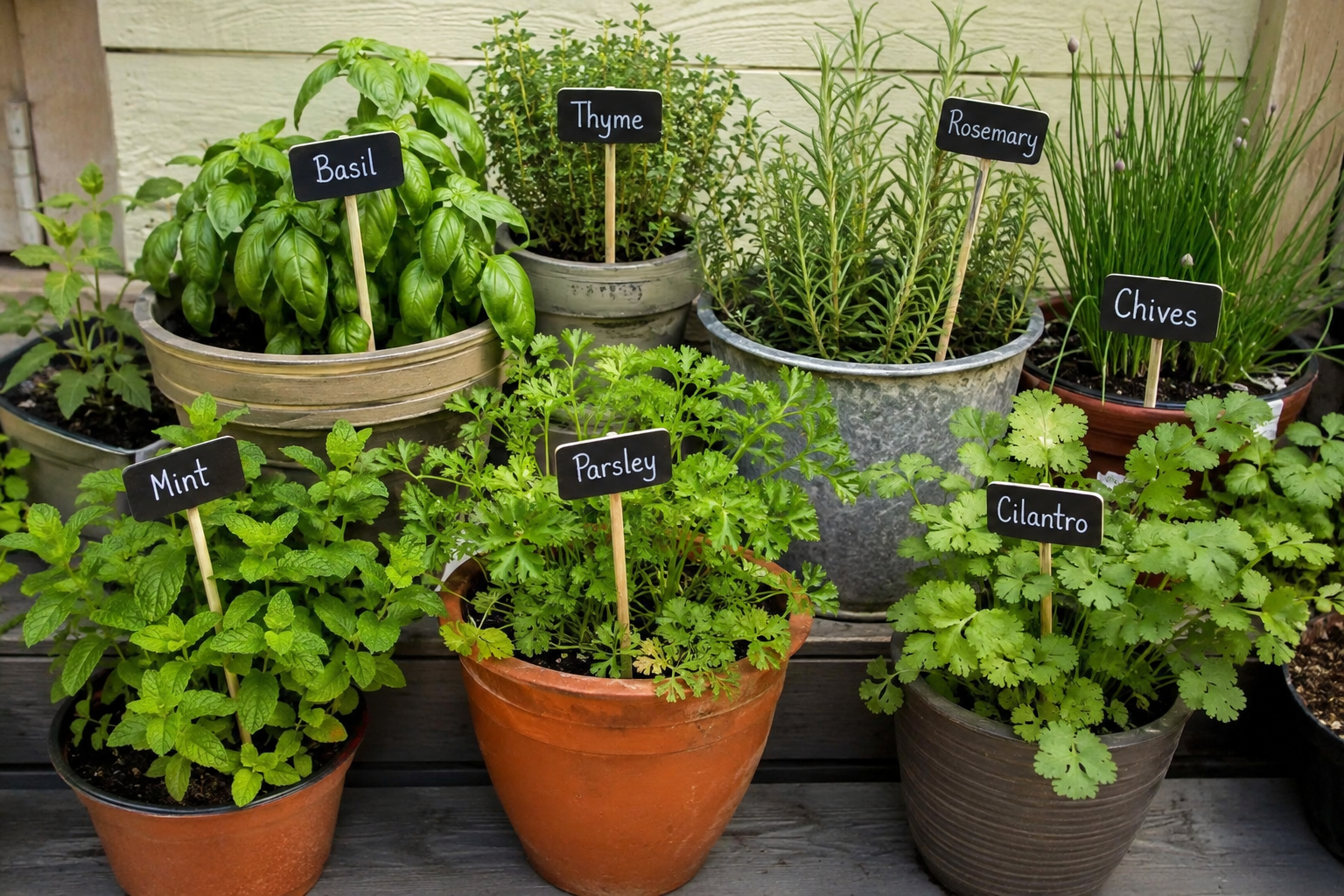
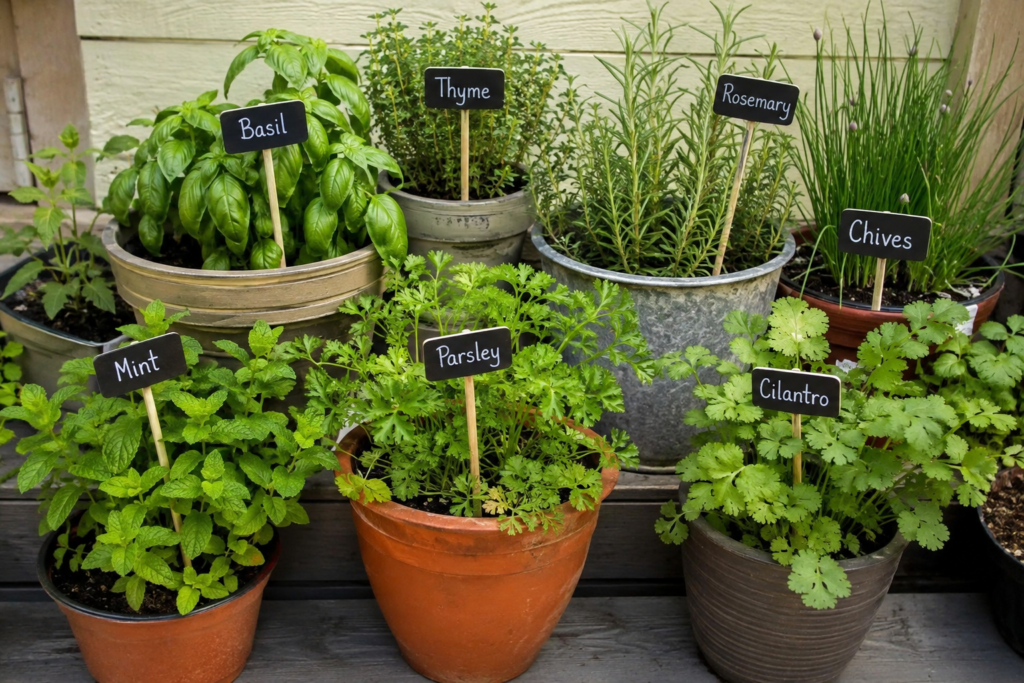
Basil is a popular choice because it grows quickly and is useful in many dishes. Mint is another easy herb, but it can spread aggressively, so growing it in its own container is usually a good idea. Parsley, coriander, chives, thyme, oregano, and rosemary are also excellent choices for a small herb garden.
Think about the herbs you actually use in your kitchen. Growing your favorite herbs means you will have fresh ingredients available whenever you need them. It also prevents you from wasting space on plants that you rarely use.
Use Containers to Save Space
Containers are one of the best solutions for growing herbs in a small garden. You can place several pots on a balcony, shelf, windowsill, or patio without needing a traditional garden bed.
Choose containers that have drainage holes at the bottom. Good drainage is important because excess water can damage herb roots. The size of the container should match the herb you are growing. Small herbs can grow in smaller pots, while rosemary and other larger herbs may need more room for their roots.
You can also use a long planter to grow several compatible herbs together. However, avoid placing herbs with very different water requirements in the same container.
Prepare Good Quality Soil
Healthy soil gives herbs the foundation they need for strong growth. Use a good quality potting mix that allows water to drain while still holding enough moisture for the roots.
Avoid using heavy garden soil alone in containers because it can become compacted and may not provide enough drainage. A lightweight potting mix is generally more suitable for small herb gardens.
Before planting, fill your container with fresh soil and leave a little space at the top. This makes watering easier and helps prevent soil from spilling over the sides.
Plant Herbs at the Right Time
The best planting time depends on your local climate and the type of herb you want to grow. Warm season herbs such as basil generally prefer warmer temperatures, while parsley and coriander can tolerate cooler conditions.
You can start herbs from seeds or purchase young plants from a garden center. Seeds are usually inexpensive, but young plants can give beginners a quicker start.
If you are using seeds, follow the planting depth instructions on the seed packet. Avoid placing seeds too deeply because small seeds often need to remain close to the soil surface. Keep the soil slightly moist while the seeds are germinating.
Give Herbs Enough Sunlight
Sunlight is one of the most important parts of herb gardening. Most herbs need several hours of sunlight to produce strong stems and healthy leaves.
Place your containers where they can receive good natural light. Turn the pots occasionally if one side of the plant receives more sunlight than the other. This can encourage more balanced growth.
If you are growing herbs indoors, place them near a bright window. If plants become weak, pale, or stretched, they may not be receiving enough light.
Water Your Herbs Carefully
Watering is simple, but it is also one of the most common areas where beginners make mistakes. Some people water their plants too frequently because they want them to grow quickly. However, constantly wet soil can cause root problems.
Check the soil before watering. If the top layer feels dry, give the plant enough water to moisten the soil. Allow excess water to drain from the bottom of the container.
The amount of water needed can change depending on the weather, container size, soil type, and herb variety. During hot weather, containers may dry out faster, so check them more often.
Feed Your Herbs When Needed
Herbs usually do not require heavy feeding, especially when grown in good quality soil. However, occasional feeding can support healthy growth.
A mild, balanced fertilizer can be used according to the product instructions. Avoid applying too much fertilizer because excessive nutrients can encourage weak growth and may affect the flavor of some herbs.
For many home gardeners, adding fresh compost or using a quality potting mix is enough to keep herbs growing well.
Prune and Harvest Regularly
Regular harvesting can actually encourage many herbs to produce more fresh growth. Instead of allowing plants to become too large and crowded, remove healthy leaves and stems as needed.
When harvesting basil, for example, pinch the growing tips above a pair of leaves. This encourages the plant to produce more branches. Herbs such as parsley can be harvested by cutting outer stems close to the base.
Do not remove too much from a young or weak plant at once. Give the plant enough leaves to continue producing energy and growing strongly.
Keep Your Small Herb Garden Healthy
Even a small herb garden needs regular attention. Check your plants every few days for yellow leaves, damaged stems, insects, or signs of disease.
Good air circulation is important, especially when several containers are placed close together. Give plants enough space so air can move around their leaves.
Remove dead or damaged leaves when you notice them. Keeping the garden clean can also make it easier to identify problems before they become serious.
If you notice small insects, first try removing them by hand or gently washing the leaves with water. Avoid using strong chemicals unless they are genuinely necessary and appropriate for edible plants.
Make the Most of Limited Space
When space is limited, think vertically. Shelves, hanging containers, wall planters, and tiered plant stands can help you grow more herbs without taking up much floor space.
You can also place small pots on windowsills or use a narrow planter along a sunny balcony railing if it is safely supported.
Another useful idea is succession planting. Instead of planting everything at the same time, plant small amounts of fast growing herbs at different times. This can help you maintain a steady supply of fresh leaves.
Common Mistakes to Avoid
One common mistake is choosing too many plants for a small space. Crowded herbs compete for sunlight, water, nutrients, and airflow. Start with a few herbs and expand when you understand how much space they need.
Another mistake is ignoring drainage. Containers without drainage holes can hold too much water and damage the roots.
Overwatering is also a frequent problem. Always check the soil before watering instead of following a fixed schedule every day.
Finally, do not forget to harvest your herbs. Many herbs benefit from regular trimming, and fresh harvesting allows you to enjoy the main purpose of your garden.
Enjoy Fresh Herbs From Your Own Garden
Learning how to grow fresh herbs in a small garden does not have to be complicated. With a sunny location, suitable containers, healthy soil, proper watering, and regular harvesting, even a small space can become a productive herb garden.
Start with easy herbs such as basil, mint, parsley, chives, thyme, or oregano. Choose herbs that you enjoy using in your meals and give each plant enough room to grow.
The best part of growing herbs at home is being able to pick fresh leaves whenever you need them. A small herb garden can save trips to the store, add fresh flavor to meals, and make your living space feel greener. With a little patience and regular care, anyone can enjoy fresh herbs from a small garden throughout the growing season.