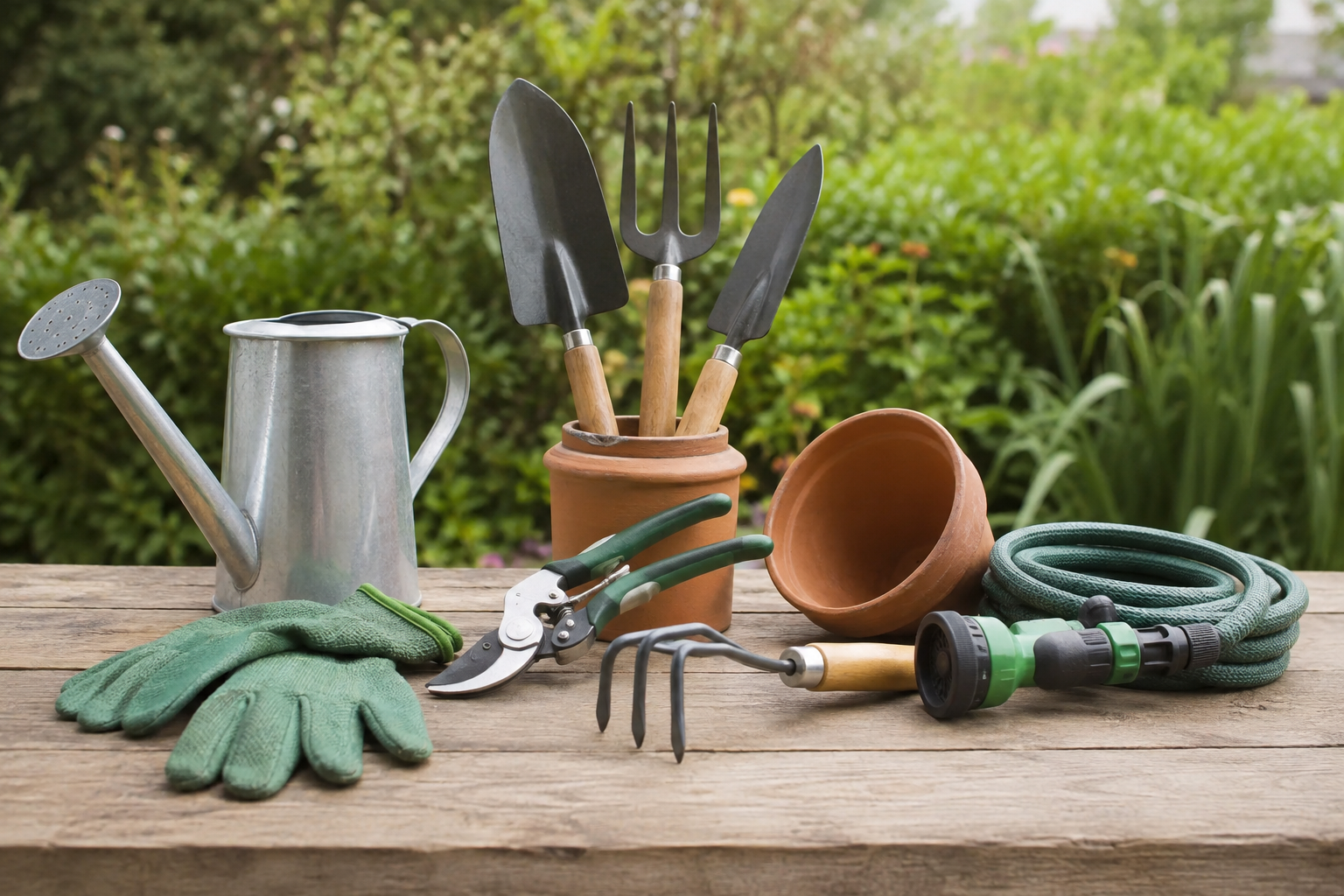
Starting a garden can be an exciting and rewarding experience. You do not need a large yard, expensive equipment, or years of gardening experience to grow healthy plants. What you really need is the right gardening tools and a little patience. Having simple gardening tools can make everyday garden work easier, faster, and more enjoyable.
For beginners, choosing too many tools at the beginning can be confusing. There are many gardening products available, but most new gardeners only need a few basic tools to get started. The best approach is to buy useful gardening tools that can help with planting, watering, weeding, pruning, and taking care of the soil.
In this article, we will look at the simple gardening tools every beginner needs and explain how each tool can help you maintain a healthy and beautiful garden.
1. Hand Trowel
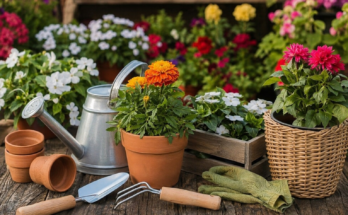
A hand trowel is one of the most important gardening tools for beginners. It is a small tool with a pointed metal blade and a comfortable handle. You can use it for digging small holes, planting flowers, moving soil, and transplanting small plants.
A hand trowel is especially useful when working in containers, flower beds, or small gardens. Look for one with a strong blade and a comfortable grip. A good quality trowel can last for many years when it is cleaned and stored properly.
2. Garden Gloves
Garden gloves may seem simple, but they are very useful for beginners. Gloves protect your hands from dirt, sharp plant parts, small stones, and rough soil. They can also help prevent minor scratches while working with plants.
Choose gardening gloves that fit your hands comfortably. They should allow you to move your fingers easily while still providing enough protection. Breathable gloves are a good choice if you spend a lot of time working outside.
Wearing garden gloves also keeps your hands cleaner, which makes gardening more comfortable and convenient.
3. Watering Can
Plants need regular watering, especially when they are young. A watering can is one of the simplest gardening tools for controlling the amount of water you give to your plants.
A watering can with a long spout can help you reach plants without stepping into the garden bed. Choose a size that you can comfortably carry when it is full. For a small home garden, a medium sized watering can is usually enough.
When watering plants, try to direct water toward the soil rather than constantly soaking the leaves. This helps the roots receive the water they need.
4. Garden Pruners
Garden pruners are useful for cutting small branches, removing damaged leaves, and shaping certain plants. They are also helpful when plants become too large or have dead growth that needs to be removed.
A sharp pair of pruners makes clean cuts and can make plant maintenance much easier. Beginners should learn how to use them carefully and avoid cutting healthy growth unnecessarily.
After using your pruners, wipe them clean and store them in a dry place. Keeping the blades clean and sharp can help them work properly for a longer time.
5. Garden Fork
A garden fork is useful for loosening soil and breaking up compact areas. Its strong metal tines can also help remove weeds and mix compost into the soil.
Healthy soil is important for successful gardening because plant roots need space to grow. If the soil is hard or packed tightly, a garden fork can help improve its texture.
For beginners, a strong garden fork with a comfortable handle is a useful investment, especially if you plan to grow vegetables or flowers directly in the ground.
6. Hand Weeder
Weeds can compete with garden plants for water, nutrients, sunlight, and space. A hand weeder is a simple tool that helps beginners remove unwanted plants from the soil.
Some weeds have deep roots, so pulling them out by hand may leave part of the root underground. A hand weeder can help loosen the soil around the root and make removal easier.
Regular weeding is usually easier than allowing weeds to grow for a long time. Spending a few minutes checking your garden regularly can save you a lot of work later.
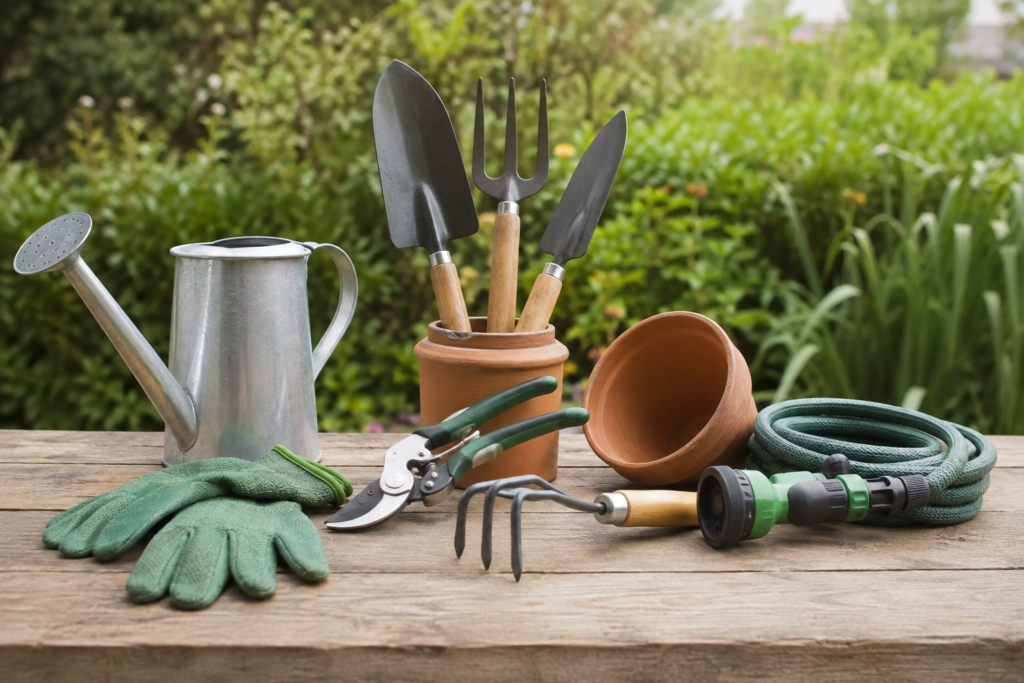
7. Garden Rake
A garden rake is another useful gardening tool for beginners. It can help remove dry leaves, small pieces of grass, and other garden debris. It can also be used to level soil before planting.
If you have a larger garden, a rake can save considerable time. Choose a rake that is strong but not too heavy for you to handle comfortably.
Keeping the garden surface clean can also make it easier to notice weeds, fallen leaves, and other problems that need attention.
8. Small Shovel
A small garden shovel can be useful for moving soil, compost, mulch, and other materials around the garden. It is especially helpful when preparing planting areas.
A shovel with a strong metal blade can handle different types of soil. Make sure the handle feels comfortable because you may use the tool frequently.
Beginners do not need a large collection of shovels. One reliable shovel can handle many basic gardening jobs.
9. Garden Hose
If you have a medium or large garden, a garden hose can make watering much easier. Carrying a watering can back and forth may become tiring when you have many plants.
A flexible hose with a suitable spray nozzle gives you more control over water flow. A gentle spray setting is useful for young plants because strong water pressure can disturb the soil.
Always store your hose properly after use to reduce the chances of damage and tangling.
10. Soil Testing Kit
A soil testing kit is not always necessary for a very small beginner garden, but it can be helpful when you want to understand your soil better. Soil conditions can affect how well plants grow.
A basic soil test can provide information about soil acidity and nutrient levels. This information can help you choose plants that are suitable for your garden and understand whether the soil needs improvement.
You do not need to test your soil constantly. Testing occasionally can be useful when plants are struggling or when you are preparing a new garden area.
11. Gardening Kneeler
Gardening often requires bending, kneeling, and working close to the ground. A gardening kneeler can make these tasks more comfortable.
For beginners who spend a lot of time planting or weeding, a simple kneeling pad can reduce discomfort. Some gardeners prefer a small portable seat instead.
This is an optional gardening tool, but it can be useful if you want to make your gardening routine more comfortable.
12. Wheelbarrow
A wheelbarrow is more useful for people with larger gardens. It can help transport soil, compost, leaves, plants, and other materials around the garden.
If you have only a few containers or a very small garden, you may not need one. However, as your garden grows, a wheelbarrow can save time and physical effort.
Choose a model that is easy for you to push and control. A lightweight option may be better for beginners who do not need to carry very heavy loads.
How to Choose Gardening Tools as a Beginner
When buying gardening tools, focus on quality and usefulness rather than buying everything at once. Start with the tools you will use most often, such as a hand trowel, gloves, watering can, pruners, garden fork, and weeder.
Comfort is also important. Tools should fit your hands and feel easy to control. Avoid tools that are too heavy or uncomfortable because they can make simple gardening tasks tiring.
It is also a good idea to choose durable materials. Strong metal blades and comfortable handles can make gardening tools last longer.
How to Take Care of Gardening Tools
Taking care of your gardening tools can increase their lifespan. After gardening, remove soil from tools and wipe away moisture. Dirty and wet tools can develop rust over time.
Keep sharp tools such as pruners in a safe and dry place. Clean them regularly, especially after cutting diseased or damaged plant material.
Store your tools in a shed, cabinet, or another protected area. Keeping everything organized also makes it easier to find the right tool when you need it.
Final Thoughts
You do not need dozens of gardening tools to become a successful gardener. A few simple gardening tools can handle most basic tasks and help you build confidence as you learn.
A hand trowel, garden gloves, watering can, pruners, garden fork, weeder, rake, and small shovel are excellent tools for beginners. Depending on the size of your garden, you can later add a garden hose, soil testing kit, kneeler, or wheelbarrow.
The most important thing is to choose tools that are comfortable, durable, and suitable for your gardening needs. With the right gardening tools and regular care, even a beginner can create a healthy and beautiful garden. Start with the basics, learn how each tool works, and enjoy the process of watching your garden grow.